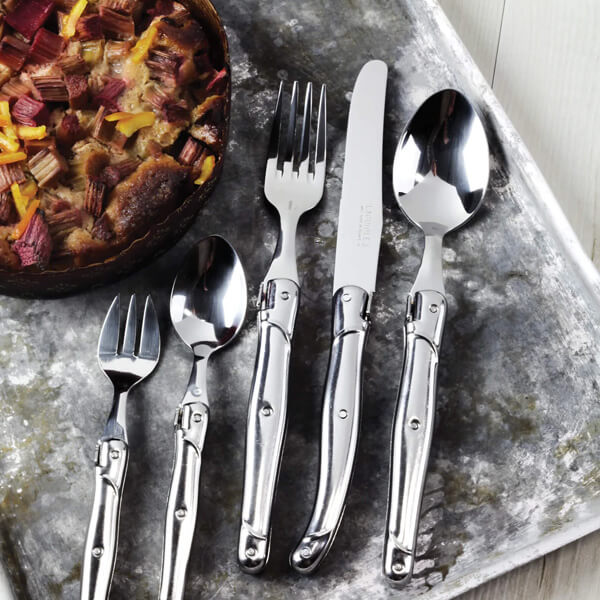

I’ve recently put together a Laguiole buying guide for our customers, designed to answer some of the most common questions and explain a little of the history behind the Laguiole cutlery we sell. But before we get into that, I have something new I’m genuinely excited to show you.
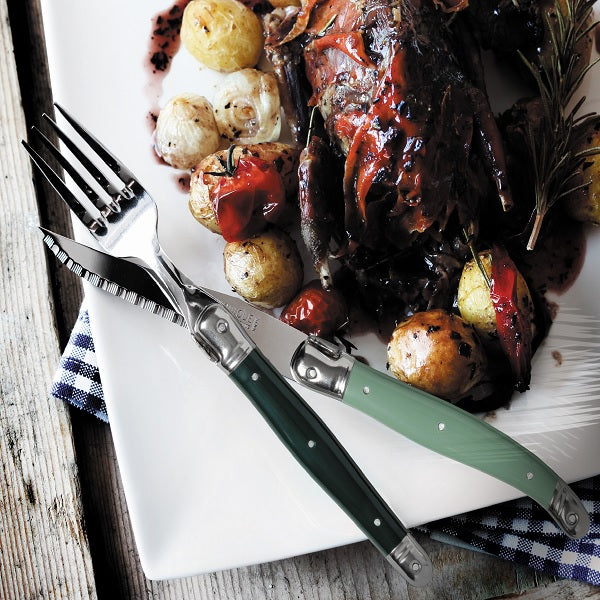
We’ve just introduced some stunning new Laguiole sets crafted with beautiful olive wood handles, and they truly stopped me in my tracks. The moment I saw them, I knew they were something special. The olive wood used for each handle is hand-finished, with a wonderfully dense feel and a rich, natural grain. No two pieces are ever quite the same, which makes every set feel unique and full of character.
Here they are:

 |
6 Piece Steak Knife Set in Wooden Block |
 |
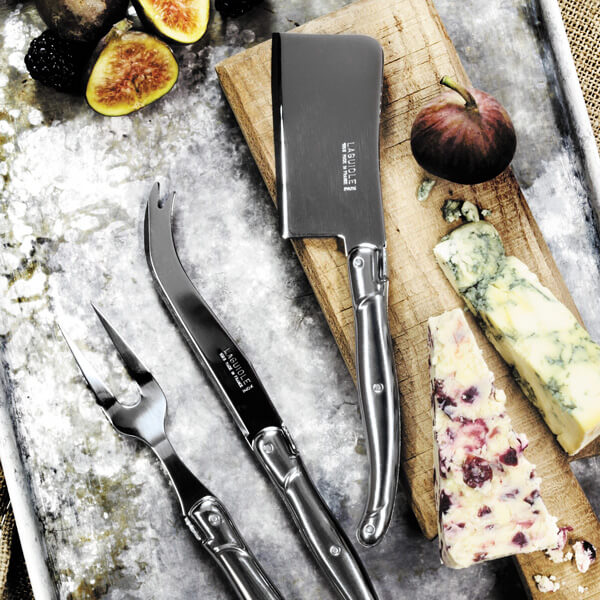
Cheese Knife, Cleaver & Butter Knife Set |
Now, back to the reason I created the Laguiole guide in the first place.
Over time, I’ve spoken with many customers who were trying to match existing Laguiole cutlery or understand why prices vary so much between different sets. It quickly became clear that there is a lot of confusion around the name “Laguiole.” Many people understandably assume it’s a brand or a single manufacturer — but that isn’t actually the case.
So here are some of the key points from the guide.
How to Choose Genuine Laguiole Cutlery
When buying Laguiole cutlery, it’s important to understand exactly what the name Laguiole represents — and what it doesn’t — whether you’re choosing your very first set or adding to an existing collection.
Laguiole Is a Style, Not a Brand
Laguiole is not a brand name. Instead, it refers to a distinctive style of cutlery that originated in the small village of Laguiole, in the Aubrac region of France.
Unlike many well-known cutlery brands, “Laguiole” is not trademark protected. There is no single governing body or strict legal definition that determines what a Laguiole knife or fork must be. This means the name Laguiole on its own does not guarantee quality, origin, or authenticity.
Who Makes Laguiole Cutlery?
Today, Laguiole-style cutlery is produced by a wide range of manufacturers — from small traditional French workshops to large overseas factories. As with many heritage designs, the Laguiole style has been widely copied.
A significant amount of Laguiole cutlery sold worldwide is manufactured outside France, often in China or Pakistan. While these products may look similar at first glance, they can differ greatly in materials, craftsmanship, balance, and finishing quality.
André Verdier — Since 1859: History & Heritage
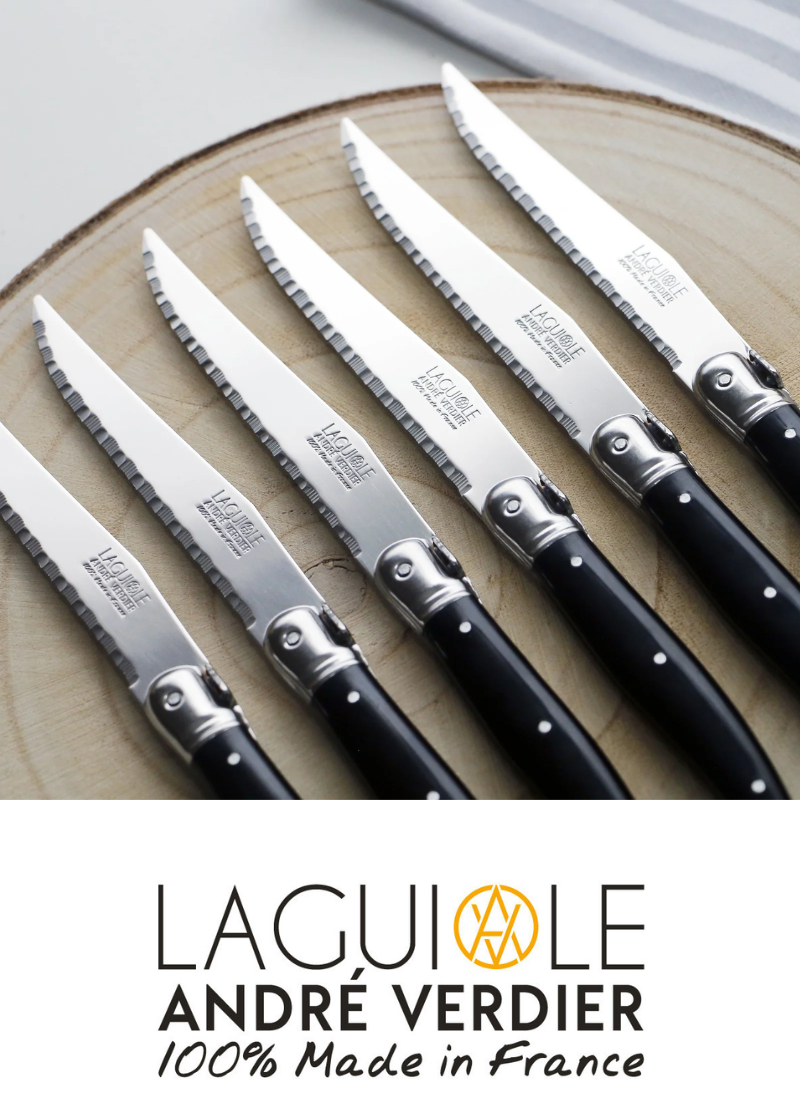
All the Laguiole cutlery we sell at Inhabito is made by André Verdier, a manufacturer with a remarkable history and reputation.
Established in 1859 in Celles-sur-Durolle, near Thiers — the historic heart of French cutlery — André Verdier has preserved the skills and traditions of master cutlers for more than 150 years. Through continuous innovation and dedication to craftsmanship, they have adapted over generations while staying true to their heritage.
Laguiole by André Verdier is 100% made in France, using carefully selected raw materials to ensure lasting quality, performance, and finish.
If you’d like to explore the full guide and learn more about the history, craftsmanship, and what sets genuine French Laguiole apart, you can read more via the link below.
Laguiole Buying Guide
Recently Published Products
New to Inhabito is this small range of food prep tools from Andre Verdier. A beautifully made, rustic style range made from hardened stainless steel and varnised Oak. 100% Made in France and very nice indeed.